Aquaculture Europe 2026
updated

The Aquatic Animal Health team at CIIMAR had a strong presence at Aquaculture Europe 2026, contributing to the conference through oral presentations, posters, pitch presentations, scientific sessions, and industry engagement activities.
Our researchers shared their latest findings across a wide range of topics, including fish health and welfare, nutrition, immunology, microbiomes, sustainable aquaculture, science communication, stakeholder engagement, and capacity building. Together, these contributions highlight the breadth of the team’s research and its commitment to supporting a more sustainable, resilient, and welfare-oriented aquaculture sector.
Beyond presenting research, Aquaculture Europe provided valuable opportunities to engage with colleagues from academia, industry, and other stakeholder groups, fostering dialogue around current challenges and future directions for aquaculture.
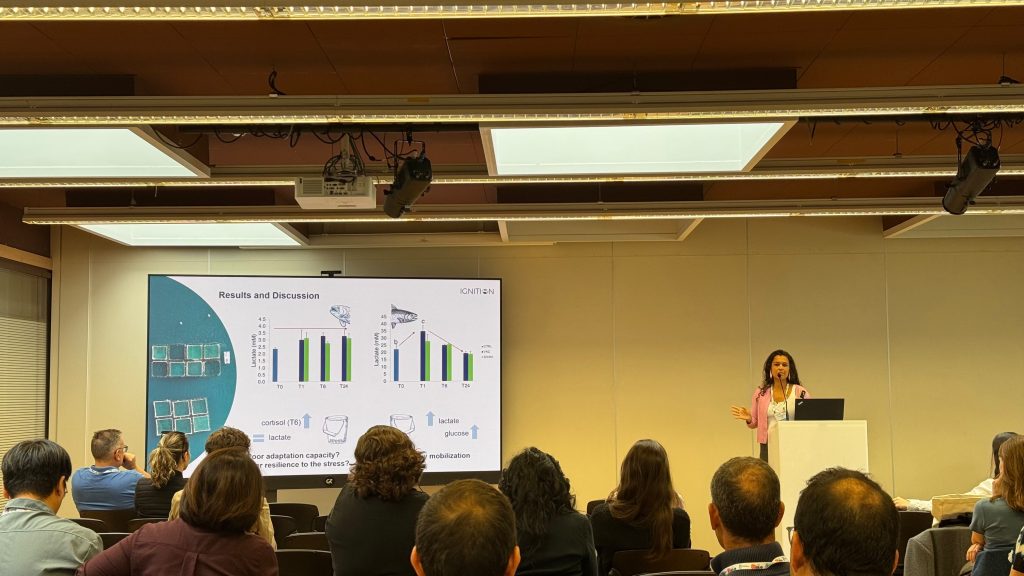
A particular highlight was the involvement of team members in the dedicated Welfare IGNITION session, co-chaired by Benjamin Costas and Tim Bean, which attracted 88 concurrent participants and generated considerable interest in advances in fish welfare research.
You can find a complete overview of the Aquatic Animal Health team’s participation at Aquaculture Europe 2026 below.







Here’s the full list of our contributions:
- Exhibition stand
We will be at booth 225, showcasing the IGNITION project
- Sessions
-
“Welfare IGNITION” session: Co-chaired by Benjamin Costas and Tim Bean (UEDIN). 30 Sep, at 10:30 – 13:30 in Urska 3
-
- Oral presentations
Welfare / IGNITION session:
30 Sep. 10:30 – Rita Azeredo – Dip vaccination induces acute stress and differential responses depending on the species: a comparison among European seabass (Dicentrarchus labrax), rainbow trout (Oncorhynchus mykiss) and Atlantic salmon (Salmo salar)
30 Sep, 10:45 – Tonka Buha – Transport stress in farmed fish: skin mucus and tissue multiomics in Atlantic salmon, European seabass, and rainbow trout
30 Sep, 11:15 – Aminur Rashid – Salicornia ramosissima bioactives as a functional ingredient for disease resistance in European seabass (Dicentrarchus labrax)
Welfare session:
30 Sep, 14:45 – André Cunha – Immunomodulatory effects of algal extracts and immunostimulants on European seabass resistance to Photobacterium damselae subsp. piscicida.
Conservation & Restoration:
29 Sep, 11:45 – Cláudia Moura – Population-specific responses of Ostrea edulis to estuarine variability: implications for aquaculture and restoration
Communicating Science session
30 Sep, 15:30 – Benjamin Costas – Science outreach as a tool to improve perceptions of aquaculture in a changing world
- Posters and pitch presentation
Welfare
-
- Marina Machado – Modulatory effects of dietary halophyte bioactives in Atlantic salmon Salmo salar welfare under simulated transport
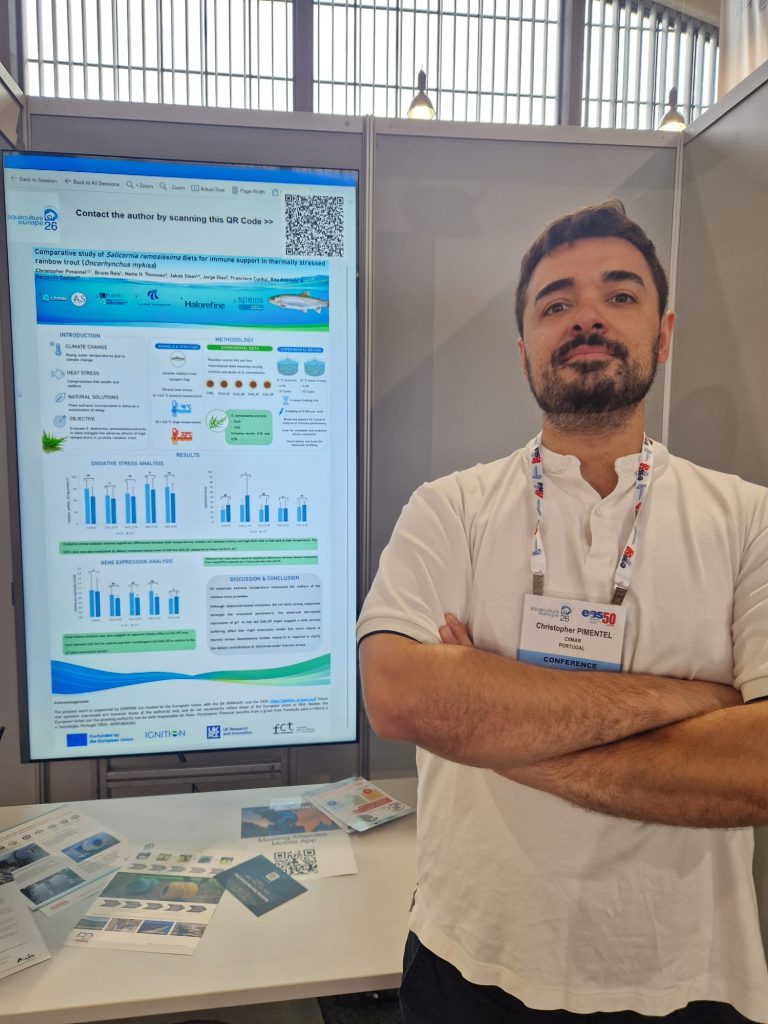
- Christopher Pimentel – Comparative study of Salicornia ramosissima diets for immune support in thermally stressed rainbow trout (Oncorhynchus mykiss)
- Posters
Welfare
-
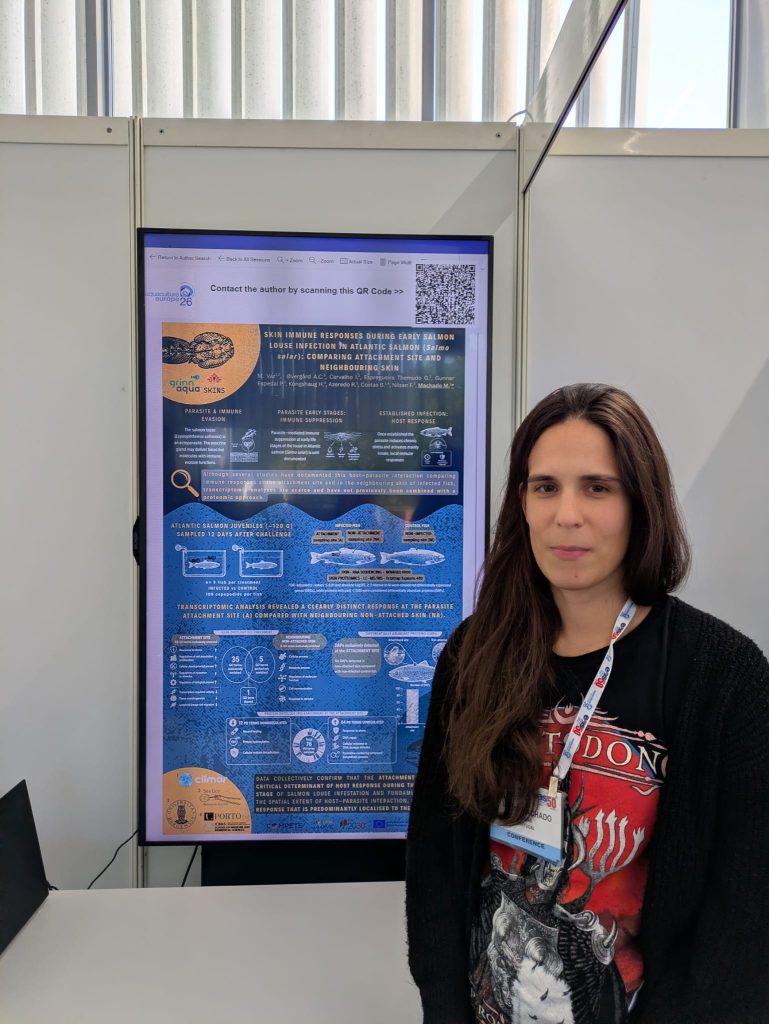
- Marina Machado – Skin immune responses during early salmon louse infection in Atlantic salmon: comparing attachment site and neighbouring skin
- Marta Macedo – Chlorella vulgaris aquafeed supplementation: friend or foe? Insights from a chronic stress trial
Nutrition – Functional Ingredients
-
- Benjamin Costas – Fortifish: improving welfare and immunity during fish early-life stages through fortified feeds
- Diogo Peixoto – Short-term dietary tryptophan supplementation modulates cortisol responses and survival following oral Yersinia ruckeri challenge in dip-vaccinated rainbow trout
- Diogo Peixoto – Neurofeed – linking sustainable nutrition to neuroendocrine mechanisms in stress resilience in European seabass: the role of black soldier fly larvae oil
- Sara Jorge – Effects of protein hydrolysates on gilthead seabream (Sparus aurata) juveniles immune status
- Vitória Pereira – Modulating intestinal innate immunity in European seabass (Dicentrarchus labrax) juveniles with bioactive protein hydrolysates
Nutrition – Alternative Ingredients
-
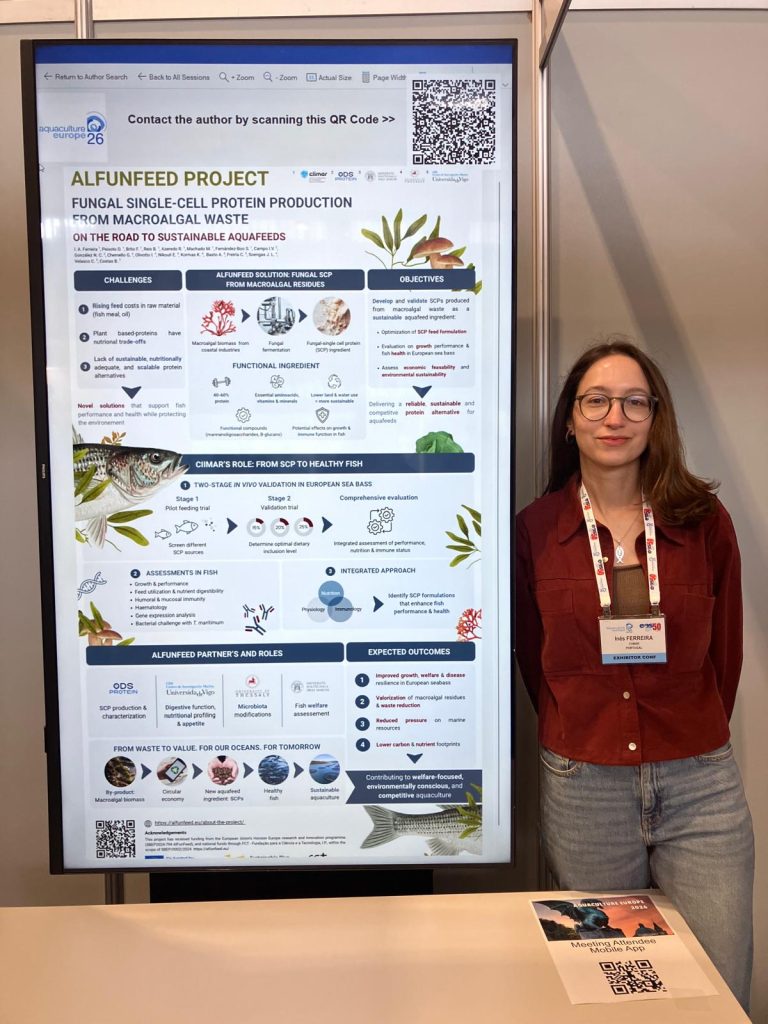
- Inês Ferreira – Fungal single-cell protein production from macroalgal waste: on the road to sustainable aquafeeds
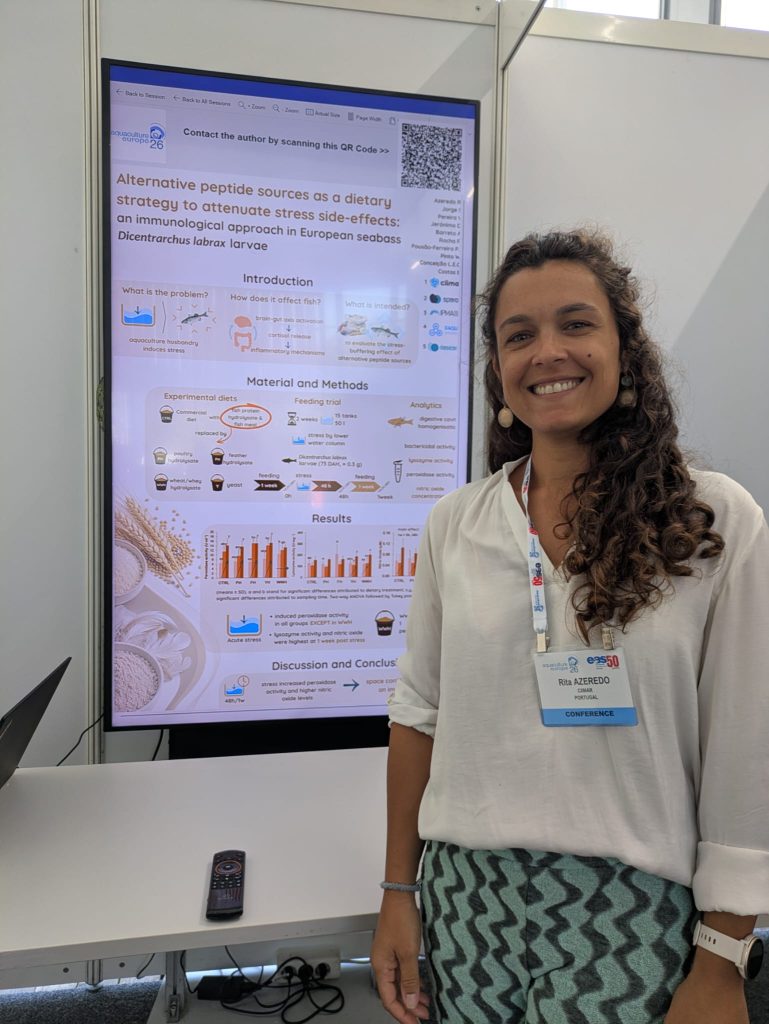
- Rita Azeredo – Alternative peptide sources as a dietary strategy to attenuate stress side-effects: an immunological approach in European seabass larvae (Dicentrarchus labrax)
Health & Welfare Management – Microbiome
-
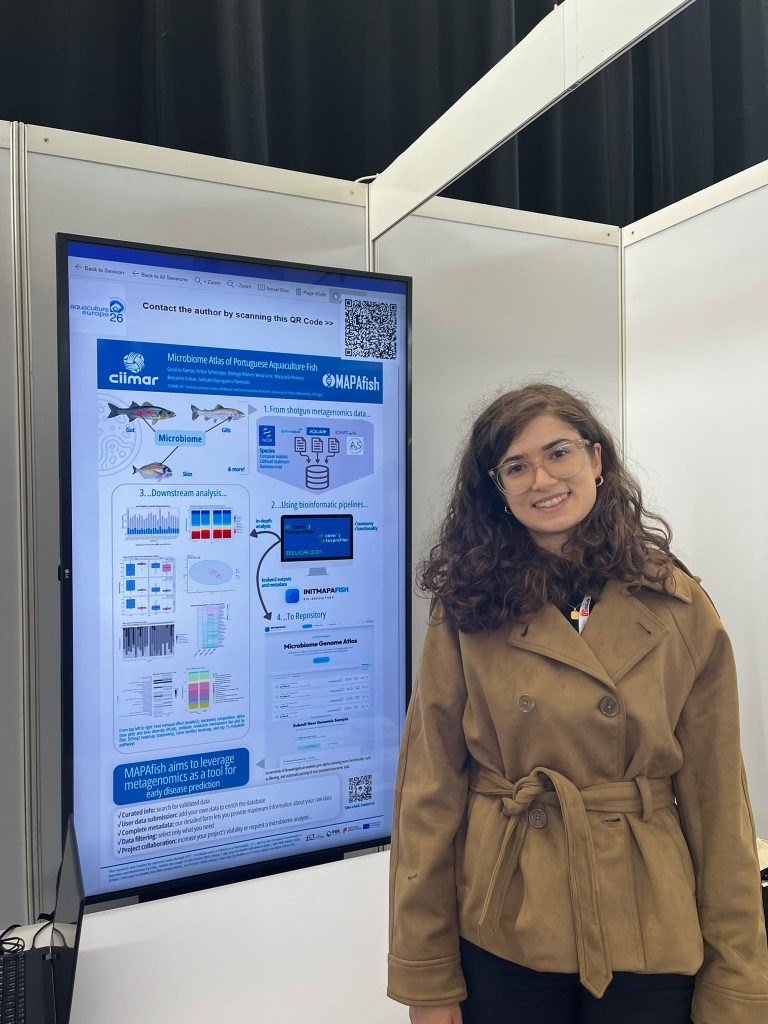
- Carolina Santos – Microbiome atlas of Portugu<ese aquaculture fish
Health Management – Biosecurity & Prevention
-
- Gregorio Molés – In ovo delivery of immunostimulants as an approach to reduce rainbow trout larvae mortality
Health Management – Treatment & Monitoring
-
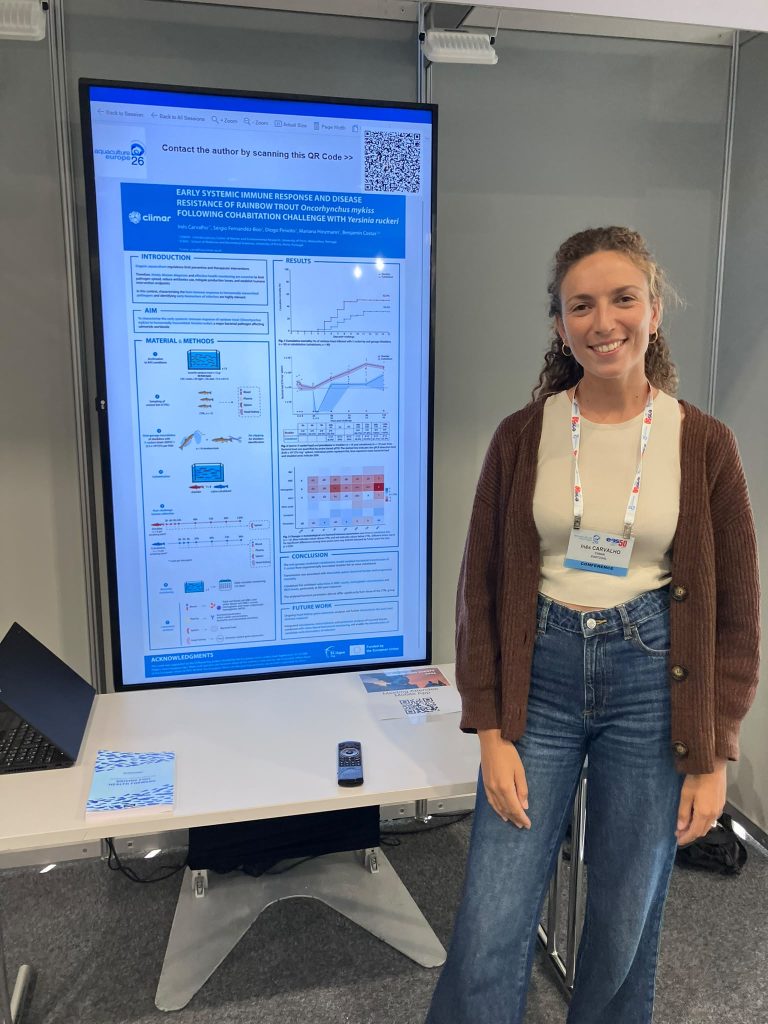
- Inês Carvalho – Early systemic immune responses and disease resistance of rainbow trout Onchorhynchus mykiss following cohabitation challenge with Yersinia ruckeri
- Gregorio Molés – Innovative antibodies for health biomarkers detection in aquaculture
Molluscs & other Shellfish
-
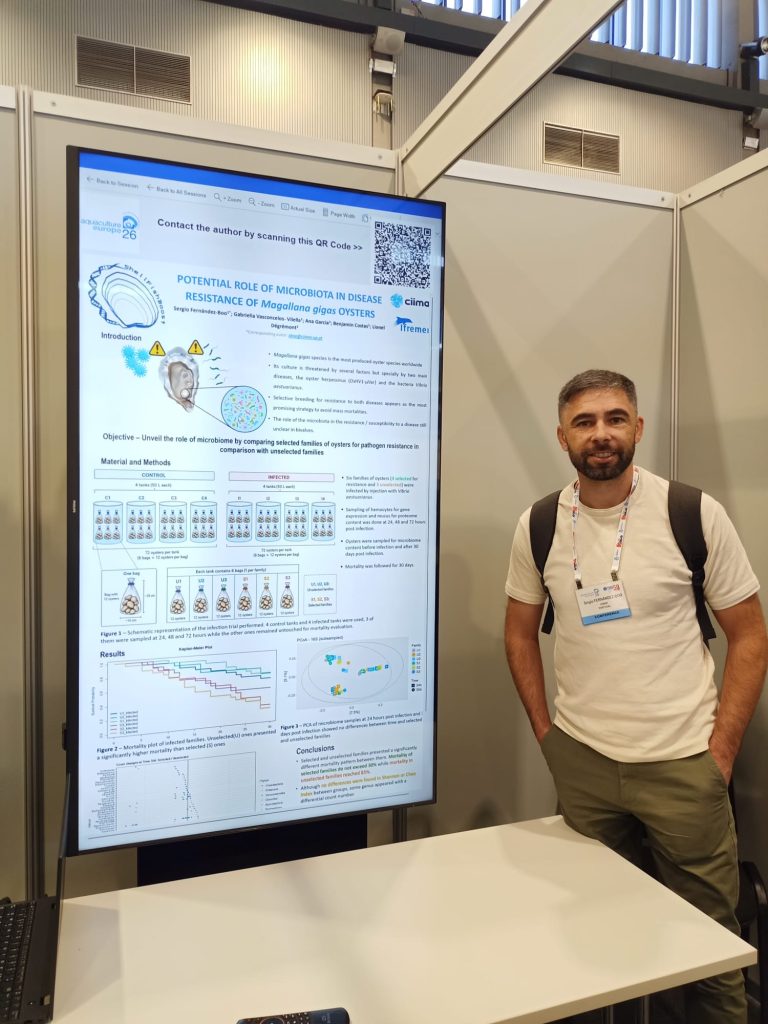
- Sérgio Boo – Potential role of microbiota in disease resistance of Magallana gigas oysters
Training & Life-Long Learning
-
- Tânia Pereira – GRINNAQUA project: Building capacity for a more sustainable aquaculture
Allocating Space for Aquaculture
-
- Tânia Pereira – GRINNAQUA insights from stakeholder engagement: addressing challenges and opportunities in aquaculture
Environment – Microplastics, Litter & Ecotoxicity
-
- Diogo Peixoto – Transcriptomic responses to sublethal exposure to PHBV Bioplastics in Artemia franciscana